




02 / CHOOSE YOUR STONE TYPE
Three collections. One clear starting point.
Explore the available slab selections. Compare colors and patterns , then contact ALPREY for current availability, slab images and videos, and selection details.
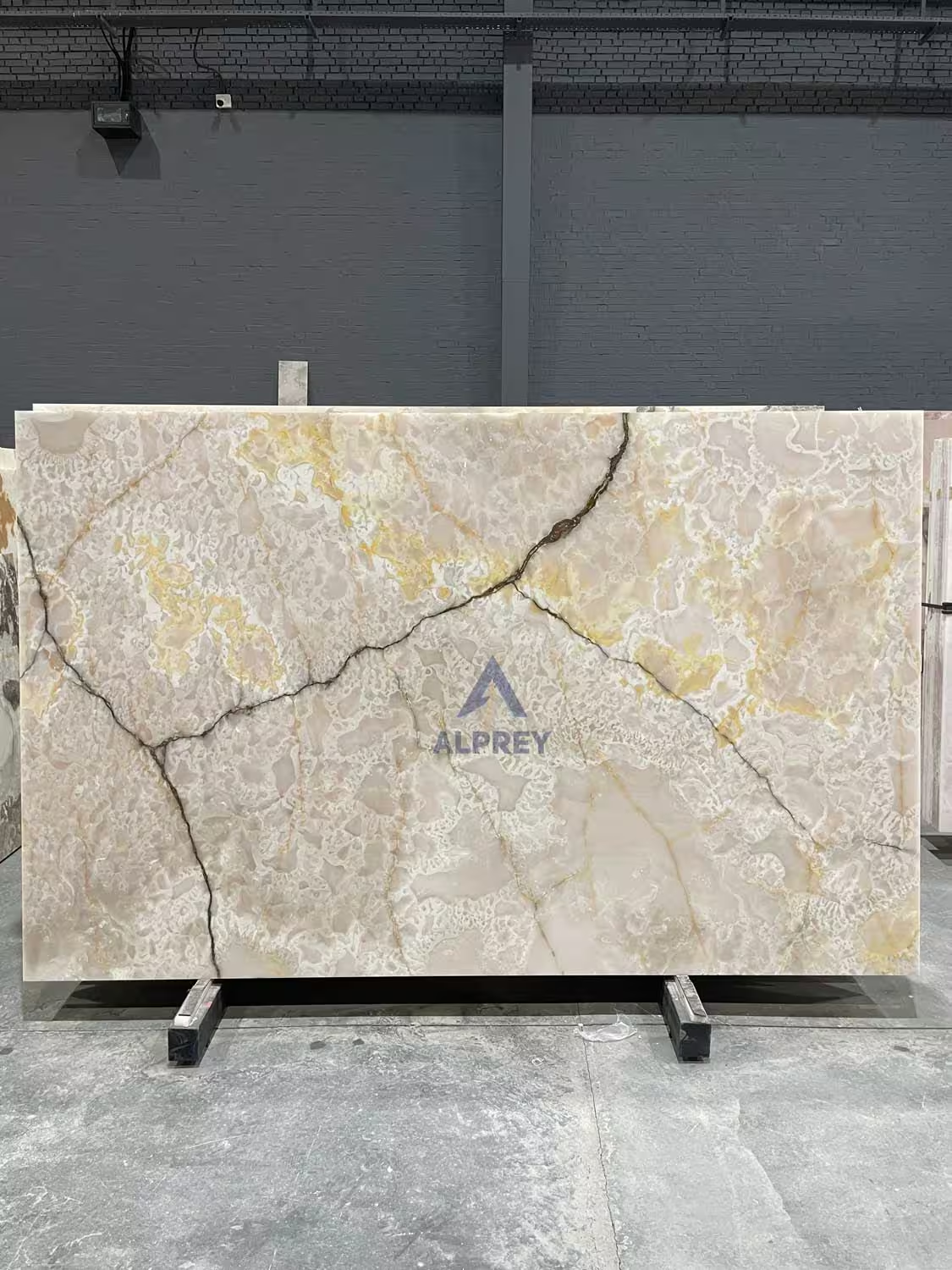
PROJECT-READY STONE
EXPORT READY
Explore onyx references by color, then use the individual slab code to ask about the exact sample.
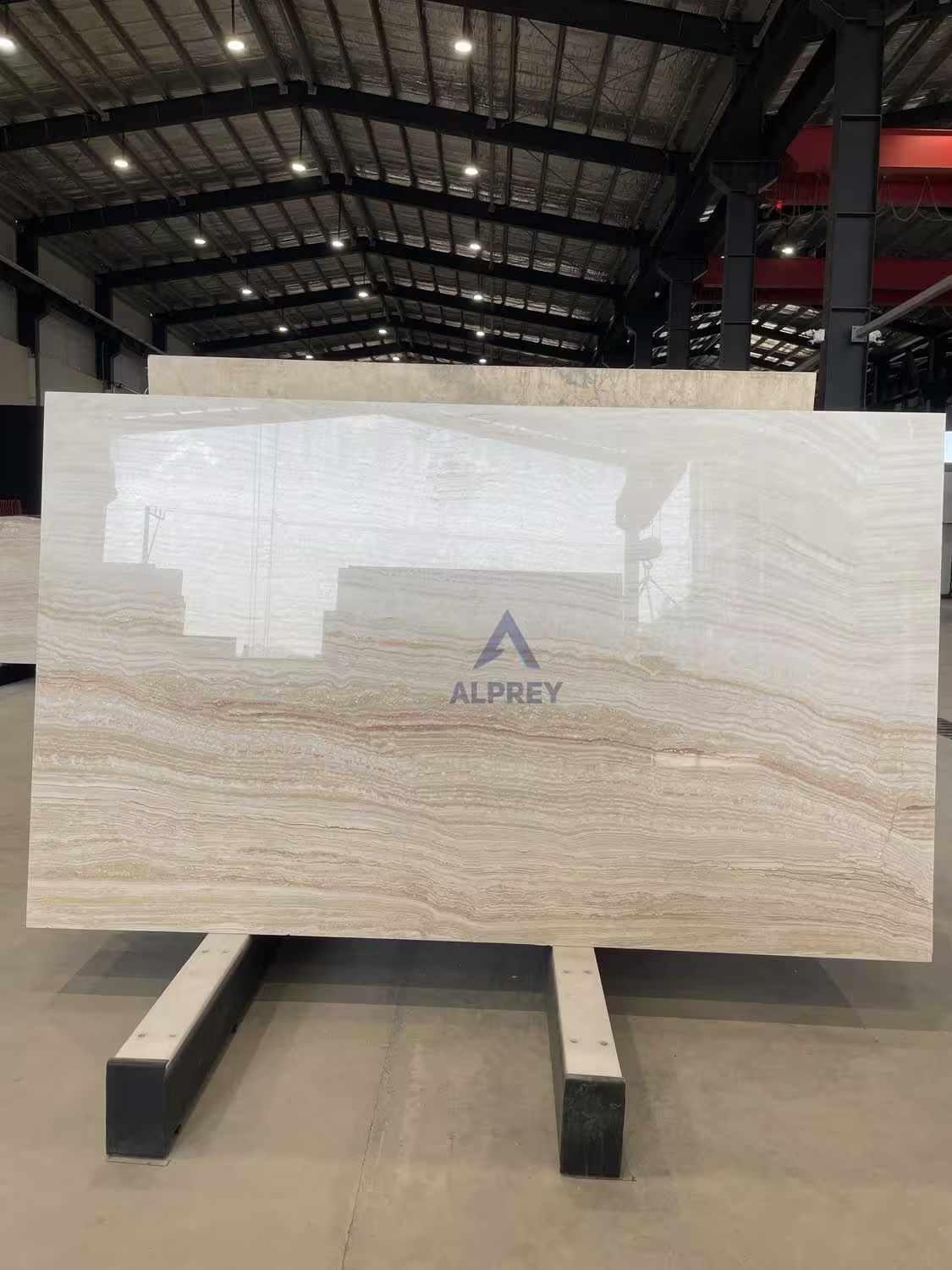
PROJECT-READY STONE
EXPORT READY
Browse travertine references by color and contact ALPREY with the product code you prefer.
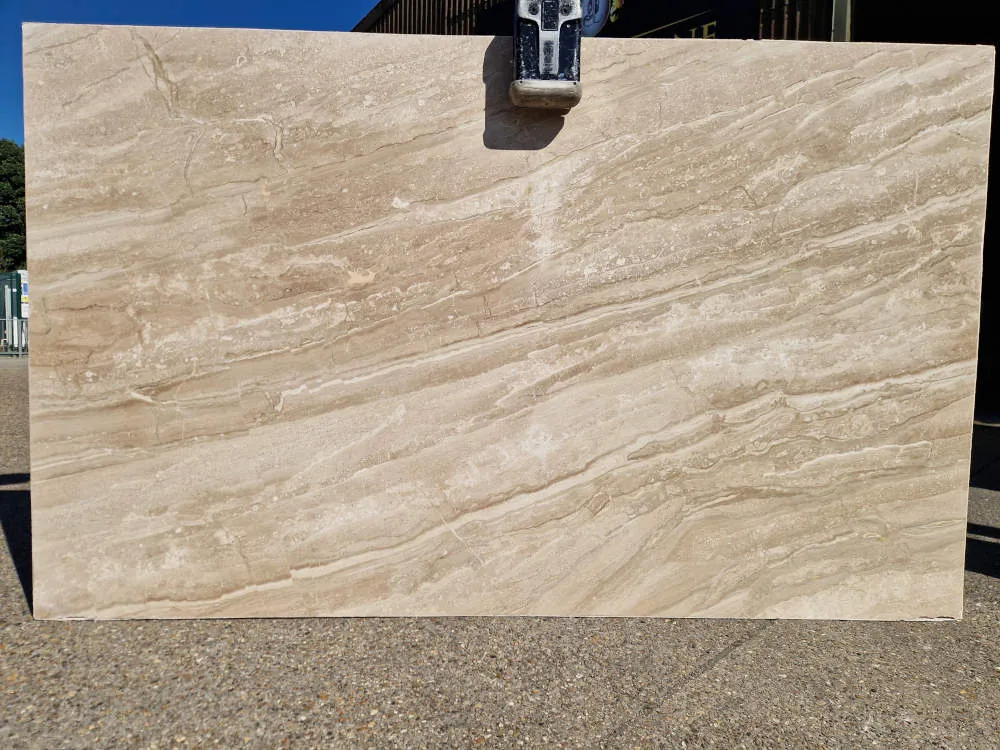
PROJECT-READY STONE
EXPORT READY
Explore marble references by color. Use the unique reference code when requesting details.
03 / HOW TO FIND YOUR SLAB
From category to exact reference
Use the material page to narrow your search by color. A unique code on each sample helps you identify the exact slab when you ask for a quotation.
1
Choose a stone family
Start with Onyx, Travertine or Marble.
2
Browse by color and reference
Open a category page and note the slab code you like.
3
Ask for current details
Send the code, destination, quantity and any known specifications.
04 / NOT SURE WHICH FORMAT YOU NEED?
Choose the product form that fits your work.
Keep the main Slabs page focused on slab categories; these links help buyers who are looking for raw blocks or project-sized components.
RAW MATERIAL
Natural Stone Blocks
For buyers and processors sourcing blocks for further cutting and production.
LARGE-FORMAT STONE
Slabs
For buyers who want slab references and will plan their own fabrication.
PROJECT FORMAT
Cut-to-Size
For project requirements that include dimensions or drawings for review.
READY TO EXPLORE?
Choose a collection and
find a slab reference
Ask about the sample code, current availability and specifications for your destination.
Natural Stone Slabs for Commercial Projects
Premium Marble, Travertine, Limestone, Granite and Onyx Slabs for International Buyers
Natural stone slabs occupy an important position between the geological character of quarried stone and the precision required by modern architecture. They reveal the colours, mineral structures, veins, textures, and natural variations that make each stone distinctive, while providing a practical format for fabrication into flooring, wall cladding, countertops, furniture, architectural features, and other finished products.
For international buyers, selecting natural stone slabs is not simply a matter of choosing an attractive colour. The commercial value of a slab depends on its material characteristics, dimensions, thickness, surface finish, visual consistency, processing quality, and suitability for the intended application. These factors must be considered alongside material availability, order quantity, inspection requirements, packaging, and export arrangements.
ALPREY approaches natural stone procurement as an independent international sourcing and trading activity, connecting buyers with Iranian stone supply opportunities and helping structure purchasing discussions around clearly defined requirements.
Whether you are an importer expanding your natural stone portfolio, a distributor seeking distinctive materials, a stone fabricator purchasing slabs for further processing, or a contractor sourcing material for a commercial development, understanding the characteristics of each slab is essential to making a sound purchasing decision.
This guide explores the main types of natural stone slabs, their applications, technical considerations, quality assessment, pricing factors, and the information international buyers should prepare when requesting a quotation.
What Are Natural Stone Slabs?
Natural stone slabs are relatively large, flat sections of natural stone produced by cutting suitable blocks into sheets of a specified thickness. Depending on the stone type, processing method, and intended market, slabs may subsequently undergo calibration, surface finishing, resin treatment, filling, reinforcement, or other processing operations.
Unlike finished tiles, which are generally supplied in predetermined smaller dimensions, slabs provide larger working surfaces that fabricators can cut into components suited to individual projects.
A single slab may be used to manufacture countertop sections, wall panels, stair components, vanity tops, decorative features, or other architectural products. Several slabs may also be selected and arranged to create visual continuity across a larger installation.
The commercial term slab does not define a single standard size or thickness. Dimensions vary according to the original block, the stone’s characteristics, production equipment, processing requirements, and the supplier’s available product range.
Buyers should therefore request actual dimensions and thickness information rather than assuming that every supplier uses the same standard.
It is also important to distinguish between a natural stone slab and a finished cut-to-size product.
A slab is generally purchased as a larger piece of material intended for subsequent fabrication. A cut-to-size product, by contrast, has been cut to specified finished dimensions for a particular application or project. The two product categories are closely related, but they serve different procurement requirements.
Why Natural Stone Slabs Matter in Commercial Procurement
Slabs offer flexibility for businesses that manufacture finished stone products or supply materials for construction projects. Their size allows fabricators to plan cutting layouts, coordinate patterns, and produce multiple components from a suitable piece of material.
For importers and distributors, slabs can also provide a versatile product category serving several downstream markets, from residential interiors to commercial architecture.
Flexibility for Custom Fabrication
Purchasing slabs allows fabricators to determine the dimensions and shapes of the final components according to their own machinery, production schedules, and customer requirements.
Depending on the material and its condition, a slab may be cut into countertop pieces, wall panels, flooring components, stair treads, thresholds, or decorative elements.
This flexibility is especially valuable when a buyer serves multiple markets or receives orders with varying dimensions.
Better Visibility of Natural Patterns
Large stone surfaces provide a broader view of the material’s veining, mineral distribution, colour transitions, and overall visual character.
This matters when selecting marble with distinctive veins, travertine with a particular pore structure, or onyx intended for a decorative feature.
Viewing slabs individually can help buyers assess whether the appearance is suitable for the project and whether several pieces can be coordinated visually.
Material Yield and Production Planning
The dimensions and condition of a slab influence how efficiently it can be converted into finished products.
Fabricators consider the required component sizes, cutting kerf, edge allowances, natural defects, vein direction, and the number of pieces needed. A suitable cutting plan can help reduce unnecessary offcuts and improve material utilisation.
However, the largest slab is not automatically the most economical option. Its value depends on the finished dimensions required, the usable area, material quality, and the cutting layout.
Flexibility Across Different Markets
Natural stone slabs can serve businesses supplying kitchen and bathroom fabricators, architectural contractors, interior designers, furniture manufacturers, and commercial construction projects.
For distributors, selecting slabs with clear product descriptions, consistent identification, and reliable technical information can simplify inventory management and customer communication.
The most suitable purchasing strategy depends on the buyer’s customer base, turnover, processing capabilities, and tolerance for natural variation.
Types of Natural Stone Slabs
Different stones offer different combinations of appearance, physical properties, fabrication requirements, and maintenance considerations. Selection should be based on the specific material rather than its commercial name alone.
Marble Slabs
Marble is widely recognised for its distinctive veining, refined appearance, and broad range of colours, from white and cream to beige, grey, green, and darker tones.
Marble slabs are commonly considered for interior flooring, wall cladding, vanity tops, reception counters, decorative furniture, and selected architectural features.
The appearance of marble can vary considerably between geological deposits and even between slabs from the same block. Vein intensity, background colour, mineral inclusions, and the direction of the pattern all influence the final visual result.
For projects requiring coordinated surfaces, buyers should discuss slab selection and sequencing before fabrication begins.
Bookmatching, for example, involves arranging adjacent slabs so that their patterns create a mirrored visual effect. This requires deliberate selection and orientation; it should not be assumed to be included in a standard slab order.
Marble is also sensitive to certain acidic substances, depending on its composition and finish. For kitchen surfaces, hospitality interiors, and other demanding applications, the expected use, maintenance routine, and surface treatment should be considered before selection.
Travertine Slabs
Travertine is valued for its characteristic pore structure, layered appearance, and natural colour range, including silver, beige, cream, and warmer earth tones.
Travertine slabs may be considered for wall cladding, interior surfaces, selected countertops, decorative panels, and other applications suited to the properties of the particular stone.
One important specification is the treatment of natural pores and voids. Depending on the intended appearance and application, travertine may be supplied unfilled or with an agreed filling treatment. Fillers and finishes can influence both the appearance and maintenance requirements of the finished surface.
Buyers should identify whether they require a filled or unfilled product and clarify the type of treatment where relevant.
For slab selection, colour consistency, visible pore characteristics, fissures, surface finish, and thickness are important considerations.
Travertine varieties are not interchangeable simply because they share the same commercial category. Samples or photographs of the actual material can help buyers establish realistic expectations before ordering.
Limestone Slabs
Limestone offers a broad range of understated colours and textures that can complement contemporary, traditional, and minimalist architectural designs.
Depending on the specific material, limestone slabs may be considered for interior wall panels, selected flooring, decorative features, and other applications requiring a natural, relatively restrained appearance.
Limestone properties vary according to mineral composition, porosity, density, geological formation, and processing. These differences can influence absorption, strength, durability, and suitability for particular environmental conditions.
For exterior or high-traffic applications, the material should be evaluated against the project’s performance requirements rather than selected on appearance alone.
Where technical documentation is required, buyers should identify the applicable test methods and acceptance criteria before confirming an order.
Granite Slabs
Granite slabs are frequently considered for surfaces where hardness, abrasion resistance, and practical durability are important.
Applications may include countertops, commercial flooring, selected wall surfaces, stairs, and architectural components.
Granite is available in a wide range of granular patterns, colours, and mineral compositions. Its visual consistency and technical characteristics depend on the particular variety.
Surface finish should be selected according to the intended use. Polished surfaces offer a reflective appearance, while honed, flamed, and other finishes produce different textures and functional characteristics.
For wet areas or flooring, the relevant slip resistance requirements must be evaluated for the actual finished product and installation conditions.
A stone’s commercial designation alone does not establish that it meets every performance requirement.
Onyx Slabs
Onyx is often selected for decorative applications where distinctive patterns, colour transitions, and potential translucency are important.
It may be considered for feature walls, reception areas, decorative counters, and backlit architectural installations.
The material requires careful selection and handling because its physical characteristics may differ significantly from those of harder stones used for demanding structural or heavily trafficked applications.
For backlit projects, buyers should assess translucency, colour distribution, thickness, panel dimensions, support requirements, and the proposed lighting arrangement.
Large decorative installations may also require reinforcement or specialised fabrication, depending on the specific material and design.
Availability, processing feasibility, and the appropriate installation method should be confirmed before production is approved.
Slab Applications Across Commercial and Architectural Markets
Natural stone slabs are used in numerous applications, but the specification should always reflect the demands of the intended use.
Kitchen Countertops and Worktops
Countertops require careful attention to thickness, surface finish, edge details, cut-outs, support conditions, and maintenance requirements.
Marble and granite are commonly considered for these applications, while other suitable natural stones may be selected according to the design and performance criteria.
Buyers should establish whether the order includes only slabs or also includes finished countertop fabrication. These are different scopes of supply and should be quoted accordingly.
Bathroom Vanity Tops
Vanity tops may require precise dimensions, basin openings, tap holes, finished edges, and coordinated splashbacks.
The material should be assessed for its interaction with moisture, cleaning products, and the expected maintenance routine.
For projects involving several bathrooms, consistent material selection and batch coordination can help achieve a more coherent appearance.
Wall Cladding and Interior Features
Large slabs can provide a relatively continuous visual surface for reception areas, hotel lobbies, retail interiors, and other commercial spaces.
The design may depend on vein direction, panel arrangement, joint positioning, and the relationship between adjacent slabs.
For exterior cladding, the stone must also be suitable for the proposed fixing system and environmental exposure. Panel dimensions, thickness, anchorage, and support details require appropriate technical review.
Flooring and Stair Components
Slabs can be processed into flooring pieces, stair treads, risers, and other components.
Selection should account for the expected traffic, finish, thickness, abrasion resistance, and relevant slip resistance requirements.
The finished components must also be coordinated with the installation system and the dimensions of the actual space.
Furniture and Decorative Stone Products
Stone slabs can be used for tables, consoles, reception desks, shelving, and decorative furniture.
These applications may involve unusual shapes, exposed edges, cut-outs, or combinations with metal and wood.
The design should account for the slab’s weight, support conditions, geometry, and handling requirements.
For thin or unusually shaped pieces, fabrication feasibility should be reviewed before a final commercial commitment is made.
Understanding Slab Dimensions and Thickness
Dimensions are among the most important elements of a slab quotation because they affect material yield, fabrication options, shipping weight, and commercial value.
A buyer should request the actual length, width, and thickness of the offered material, together with the number of slabs available or the quantity that can potentially be sourced.
Thickness should be specified clearly. Different applications may require different thicknesses, and a nominal thickness does not necessarily describe the permitted variation after processing.
Where calibration is required, the buyer should define the acceptable dimensional range and the method used to verify it.
Length and width also influence usability. A slab may have sufficient total area but still be unsuitable for a particular cutting layout because of its shape, defects, or the dimensions of the required components.
For this reason, professional buyers evaluate the usable dimensions and the actual cutting requirements rather than comparing square metres alone.
When several slabs are supplied in one order, identification and dimensional records can help the buyer plan production and assign material to individual projects.
Surface Finishes and Material Treatments
Surface finish significantly influences the appearance and practical characteristics of a stone slab.
Polished finish: Produces a reflective surface that can emphasise colour and veining. Its suitability depends on the stone and the intended application.
Honed finish: Creates a smoother, generally less reflective appearance. It is frequently considered for understated architectural interiors.
Brushed finish: Introduces a textured appearance through mechanical processing. The final result depends on the stone and the brushing method.
Leathered finish: Creates a textured surface with varying degrees of reflectivity and tactile character.
Flamed finish: Uses a thermal treatment on suitable stones to create a textured surface. Its availability depends on the material’s composition and response to processing.
Other treatments may include filling, resin application, reinforcement, or sealing where appropriate.
Buyers should specify the required finish and clarify which surfaces and edges will receive treatment. A slab described simply as “polished” may still require clarification regarding the finish quality, edge condition, and any filled areas.
The exact result should be assessed against an approved sample or another clearly defined reference when appearance is commercially important.
Quality Assessment Before Purchasing Stone Slabs
Quality should be evaluated against the agreed specification, not against a vague expectation that every natural stone slab will be visually identical.
Natural stone is a geological material. Colour changes, veins, pores, mineral inclusions, and other characteristics may be inherent to the material. Their acceptability depends on the product, application, agreed grade, and buyer’s selection criteria.
A practical quality assessment may include the following:
Visual inspection: Review colour, pattern, visible defects, fissures, repairs, and surface consistency against the agreed reference.
Dimensional verification: Confirm the actual length, width, and thickness and identify any permitted variation.
Surface finish inspection: Assess whether the finish corresponds to the agreed specification and whether there is visible damage or inconsistent treatment.
Material identification: Ensure the supplied stone corresponds to the agreed product description and selection.
Quantity verification: Confirm the number of slabs, their identification, and the dimensions recorded for the shipment.
Packaging assessment: Check that the material is appropriately secured and protected for handling and transport.
For projects requiring technical verification, relevant physical properties may need to be tested. Depending on the application, these can include water absorption, density, compressive strength, flexural strength, and abrasion resistance.
ASTM International publishes dimension stone specifications and test methods. Relevant material specifications include ASTM C503/C503M for marble, ASTM C568/C568M for limestone, ASTM C615/C615M for granite, and ASTM C1527/C1527M for travertine. The current applicable edition and project requirements should be verified before specifying compliance. See the Natural Stone Institute’s ASTM standards reference and the official ASTM marble dimension stone specification.
Not every project requires every test. The appropriate testing programme depends on the stone type, application, governing regulations, and contractual specification.
A test report for one property should not be interpreted as proof of universal suitability for every application.
Slab Selection, Vein Matching and Visual Consistency
For many commercial buyers, the visual relationship between slabs is as important as the individual slab’s appearance.
This is particularly relevant to marble and onyx, where veins and colour transitions may determine the design of the final installation.
When the project requires a coordinated visual sequence, buyers should identify this requirement before purchasing. Relevant information may include the desired vein direction, sequence of slabs, acceptable colour range, and whether bookmatching or another layout arrangement is necessary.
Photographs should ideally show the actual slabs being offered and include enough information to identify each piece. Images of representative material can be useful at an early stage, but they do not guarantee that the final order will have identical patterns.
Where practical, buyers may request a selection review or an agreed approval process before the material is dispatched.
For large projects, the purchasing specification should also clarify how much natural variation is acceptable. This helps distinguish expected geological variation from deviations that fall outside the agreed commercial requirements.
Factors That Influence Natural Stone Slab Prices
The price of a natural stone slab depends on several interconnected variables. A reliable commercial comparison should account for the complete product specification and delivery conditions.
Stone type and variety: Different materials and colour varieties can have different market values because of their characteristics, demand, and sourcing conditions.
Dimensions and thickness: Larger or thicker slabs generally require more material and may involve additional handling and transport considerations.
Surface finish: Polishing, brushing, filling, calibration, and other treatments influence processing requirements and cost.
Visual selection: Distinctive veins, limited colour ranges, or coordinated slab sequences may require more selective purchasing and reduce the available yield.
Material condition: Visible defects, natural fissures, repairs, and usable dimensions can influence how much of a slab is suitable for the intended fabrication.
Order quantity: Commercial terms may vary according to the quantity, material selection, packaging, and sourcing arrangement.
Inspection and documentation: Independent inspection, laboratory testing, special identification, and additional documentation may involve separate costs.
Packaging and transportation: Slab weight, dimensions, packing method, loading, handling, freight, and destination requirements affect the delivered cost.
For an accurate comparison, buyers should request quotations using equivalent specifications. A lower price for a slab with different dimensions, a less demanding finish, or a different visual selection standard may not represent better value.
The commercial objective is to identify the material that meets the project’s requirements at an acceptable overall cost.
Natural Stone Slabs from Iran
Iran has a diverse natural stone industry that includes marble, travertine, limestone, granite, and onyx. Material characteristics and commercial availability vary by region, geological source, producer, and processing arrangement.
For international buyers, sourcing decisions should be based on the specific material rather than broad assumptions about a country’s entire stone industry.
A useful evaluation considers the requested variety, colour range, dimensions, thickness, surface finish, available quantity, inspection requirements, and intended use.
Buyers should also determine whether the material can be supplied in the required condition and whether the proposed commercial arrangement meets their delivery and documentation requirements.
For example, a buyer sourcing silver travertine slabs should specify the desired colour range, surface finish, filling treatment, thickness, and dimensional requirements. A marble buyer may need to define vein selection, visual consistency, and the number of slabs required for a coordinated installation.
Samples, actual-material photographs, clear specifications, and agreed acceptance criteria can help make these discussions more precise.
ALPREY approaches Iranian natural stone procurement as an independent sourcing and trading partner. The objective is to connect international purchasing requirements with suitable sourcing opportunities and support a clear commercial process.
Specific availability, dimensions, processing options, pricing, and delivery schedules must be confirmed for each inquiry.
ALPREY: Independent Natural Stone Sourcing and Export Support
ALPREY works with an international procurement and trading model focused on connecting buyers with Iranian natural stone supply opportunities.
For slab inquiries, the process begins with the buyer’s commercial and technical requirements. These may include stone type, preferred colour, slab dimensions, thickness, finish, quantity, destination, and required documentation.
Based on the inquiry, the sourcing process can involve evaluating potential material options, requesting product information, clarifying specifications, and coordinating discussions concerning commercial terms and export arrangements.
Depending on the transaction, the scope may include:
- Reviewing the requested stone type and product specification.
- Identifying potentially suitable sourcing opportunities.
- Requesting slab dimensions, photographs, samples, or other relevant product information.
- Clarifying material selection and visual acceptance criteria.
- Discussing inspection requirements and available technical documentation.
- Coordinating commercial quotations and export arrangements.
- Helping clarify the agreed scope of supply, packaging, and delivery terms.
The availability of specific services depends on the order and the relevant supply-chain participants. Fabrication, testing, third-party inspection, transportation, and other services must be confirmed as part of the actual commercial arrangement.
ALPREY’s approach is based on clear specifications and transparent purchasing discussions rather than unsupported promises of universal availability or identical quality across all materials.
For buyers, this creates a more structured starting point for assessing whether a proposed stone and commercial arrangement meet their requirements.
How to Request a Natural Stone Slab Quotation
A complete inquiry makes it easier to evaluate material suitability and prepare a meaningful commercial offer.
To begin, provide as much of the following information as possible:
- Stone type: Marble, travertine, limestone, granite, onyx, or another specified material.
- Colour and appearance: Preferred colour, vein pattern, visual selection, and any reference images.
- Dimensions: Required slab length, width, and thickness, or acceptable dimensional ranges.
- Surface finish: Polished, honed, brushed, flamed, or another suitable finish.
- Quantity: Number of slabs or total required area, with the measurement basis clearly stated.
- Application: Countertops, flooring, wall cladding, furniture, or another intended use.
- Quality requirements: Acceptance criteria, inspection needs, testing, or supporting documents.
- Destination: Country, delivery location, and preferred commercial terms.
- Schedule: Target dispatch date or expected delivery window.
- Additional requirements: Packaging, slab identification, visual selection, or special handling.
If the project is still at an early stage, an approximate requirement can provide a starting point. Final dimensions, technical criteria, and commercial conditions should be confirmed before an order is placed.
A quotation should identify the offered material, dimensions, finish, quantity, price basis, included services, exclusions, and delivery conditions. These details help buyers compare offers accurately and reduce uncertainty during order confirmation.
Export Packaging and International Delivery
Natural stone slabs require careful handling because their weight, dimensions, surface finish, and geometry can make them vulnerable to damage during lifting, loading, and transport.
The appropriate packaging method depends on the slab dimensions, material characteristics, surface treatment, handling equipment, transport route, and destination requirements.
Before shipment, buyers should clarify how the slabs will be separated, secured, protected against abrasion, and identified. The loading arrangement should be appropriate for the weight distribution and handling conditions.
For international orders, the commercial offer should also define the allocation of transport costs, insurance responsibilities where applicable, export procedures, and delivery obligations.
Incoterms® rules can help establish the respective responsibilities of the buyer and seller. The selected rule and named place should be stated precisely in the contract or quotation.
Buyers should not assume that freight, insurance, customs duties, destination handling, or other charges are included unless the commercial offer explicitly confirms them.
Clear coordination before dispatch helps reduce misunderstandings and supports a more predictable procurement process.
Frequently Asked Questions About Natural Stone Slabs
What is the difference between natural stone slabs and tiles?
Slabs are larger sections of stone intended for further fabrication or use in larger-format applications. Tiles are smaller, generally predetermined units supplied in standard or specified dimensions. Slabs provide greater flexibility for custom cutting and visual layout.
Which natural stones are available as slabs?
Marble, travertine, limestone, granite, and onyx are among the natural stones commonly processed into slabs. The specific varieties, dimensions, finishes, and quantities available must be confirmed with the relevant supplier.
Can I purchase Iranian marble and travertine slabs for export?
Iranian marble and travertine can be considered for international procurement. Material selection, available quantities, technical specifications, pricing, and delivery arrangements depend on the individual inquiry and must be confirmed before ordering.
What slab thickness should I choose?
The appropriate thickness depends on the stone, dimensions, intended application, support conditions, fabrication requirements, and installation system. The final specification should be established with the relevant technical professionals rather than selected solely on appearance.
Can slabs be supplied with polished or honed finishes?
Polished and honed finishes are common options for suitable stones. Other finishes may also be possible depending on the material and processing capability. The requested finish should be confirmed for the specific product.
How can I ensure colour consistency between slabs?
Provide clear colour and appearance criteria, request photographs of the actual material where possible, and establish an approval process before dispatch. Perfect uniformity should not be assumed because natural stone contains inherent geological variation.
Are stone slabs suitable for exterior applications?
Some natural stone slabs are suitable for exterior use when their physical properties, dimensions, finish, fixing system, and exposure conditions meet the project’s requirements. Suitability must be assessed for the specific stone and application.
How is the price of a slab calculated?
Pricing depends on the stone variety, dimensions, thickness, finish, visual selection, order quantity, processing, packaging, inspection, and delivery terms. Quotations should be compared using equivalent product specifications and commercial conditions.
Can I request a specific number of slabs?
You can specify the required quantity, subject to material availability and the sourcing arrangement. The quotation should identify the offered quantity and whether dimensions and selection are confirmed or still subject to verification.
What information should I provide for a slab quotation?
Include the stone type, preferred appearance, dimensions, thickness, finish, quantity, destination, and required delivery terms. Technical drawings, reference images, inspection criteria, and documentation requirements are also useful when applicable.
Does ALPREY own quarries or manufacture every slab?
ALPREY operates as an independent international procurement and trading business. Specific sourcing, processing, inspection, and delivery arrangements are established for each transaction according to the material and buyer’s requirements.
Request a Natural Stone Slab Quotation from ALPREY
Choosing the right natural stone slab requires a clear understanding of the material, its visual character, technical properties, processing requirements, and intended use.
For importers, distributors, fabricators, and commercial project buyers, a well-defined specification provides the basis for evaluating supply opportunities, comparing quotations, and coordinating international procurement.
If you are looking for marble, travertine, limestone, granite, onyx, or another natural stone variety, share your preferred material, dimensions, thickness, finish, quantity, and destination with ALPREY.
Your inquiry will provide the starting point for assessing suitable sourcing opportunities and clarifying the commercial requirements of the order.
ALPREY — Clarity for the buyer, discipline for the process and respect for the material.
Request available stones
Send these three details for selection review
Need current stone options
RESPONSE CONTEXT
Options · photos/video · dimensions · export quote